
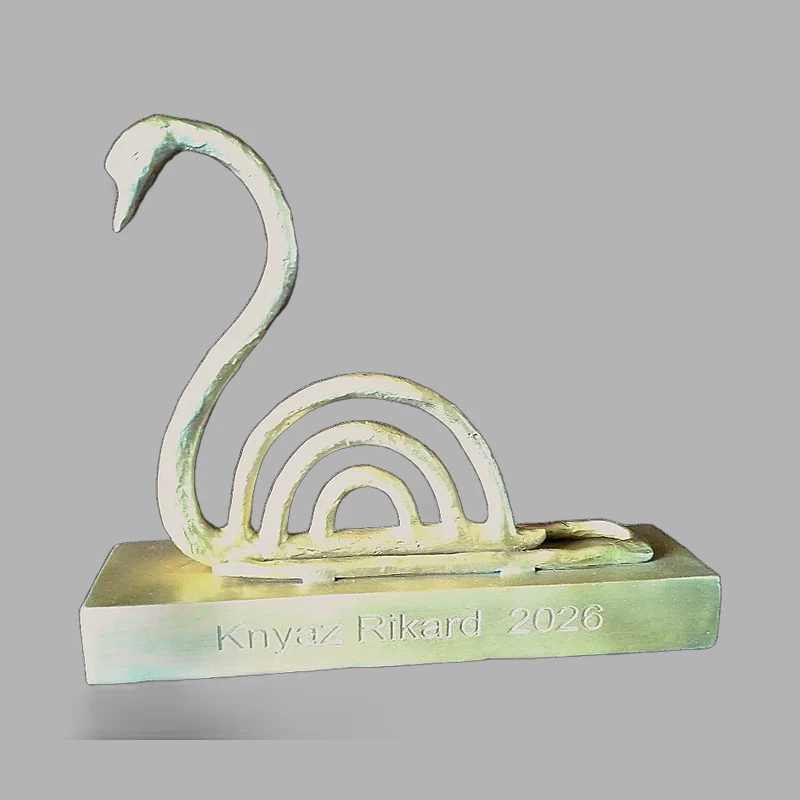
The Onega Swan
Six thousand years ago, on the shores of Lake Onega, ancient artists carved swans so large they could be seen from the water, honouring these birds as messengers between the world of the living and the realm of ancestors. This bronze swan by Rikard Högberg carries that ancient reverence forward, connecting one of the oldest artistic traditions in Northern Europe to your home.
Description
Historical Origins
Based on swan petroglyphs from the eastern shore of Lake Onega, Republic of Karelia, Russia. The site contains approximately 4,500 petroglyphs carved during the Neolithic period (circa 4500 to 3500 BC). Swan images dominate the carvings, constituting over 60% of all glyphs at some sites. A giant swan petroglyph measuring 4.1 meters was discovered at Cape Swan (Lebediny Mys) in 1986. Inscribed as a UNESCO World Heritage Site in 2021.
Scholarly Significance
The Lake Onega swan carvings represent one of the earliest known celebrations of the swan in human art. Scholars believe the swans were honoured as totemic ancestors during prehistoric festivals. The swan’s association with the sun, water, and migration made it a powerful symbol of transformation and renewal.
Sources: Poikalainen, V. & Ernits, E. (1998). Rock Carvings of Lake Onega. Tartu; UNESCO World Heritage Committee (2021). Inscription No. 1654.
Reviews
There are no reviews yet.